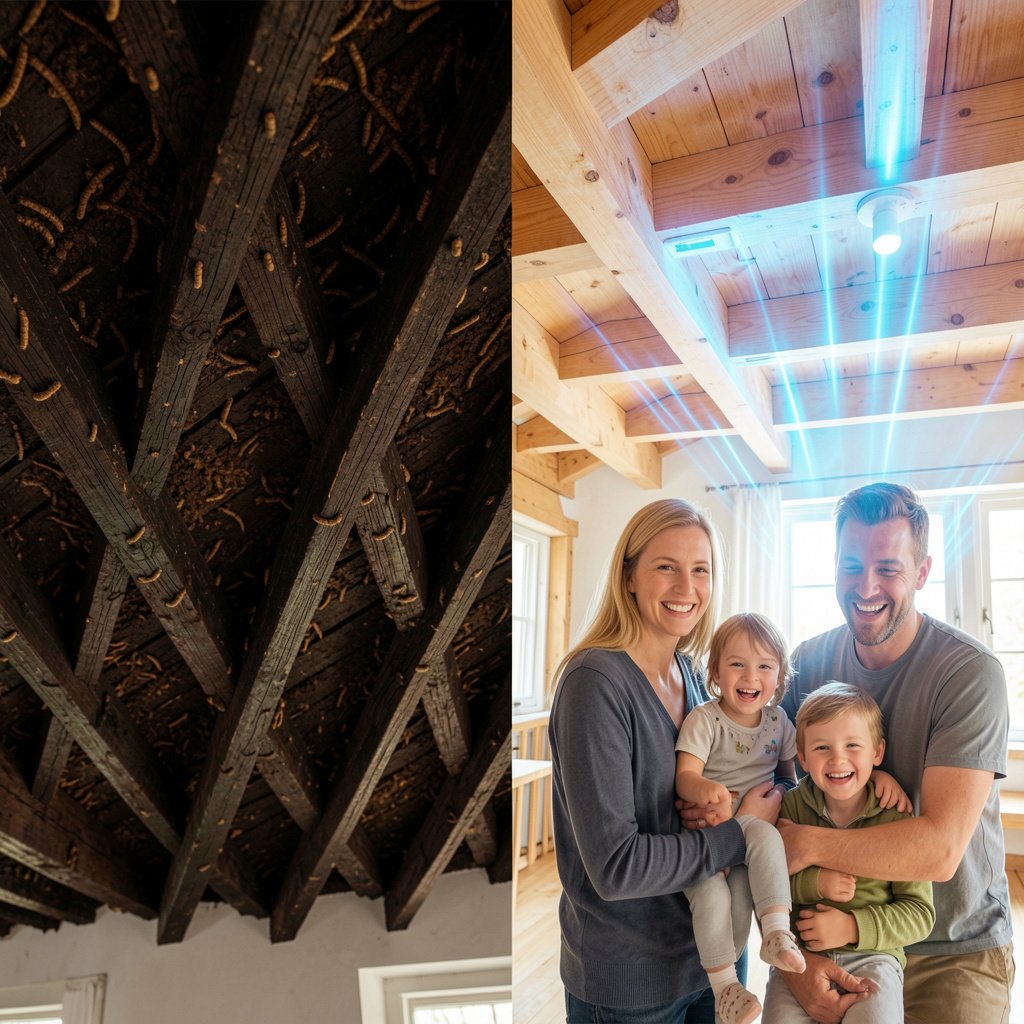
The Hidden Danger of Ignoring a Woodworm Infestation
Woodworm infestations rarely attract immediate attention. Unlike visible pests that quickly reveal their presence, wood-boring beetles spend most of their lives hidden inside timber, quietly feeding on the wood from within. A few tiny holes in a beam or a small pile of fine wood dust may not seem alarming at first, but these subtle signs can indicate a much larger problem developing beneath the surface.
Ignoring a woodworm infestation can lead to extensive damage over time, affecting the strength, safety, and value of your property. The good news is that early detection and modern treatment methods can stop the damage before it becomes severe. Shashel offers advanced microwave technology that eliminates active wood-boring insects without the use of harmful chemicals, helping homeowners and conservation professionals protect valuable timber for the future.
What Are Woodworms?
Despite their name, woodworms are not worms. They are the larvae of several species of wood-boring beetles, including the common furniture beetle, deathwatch beetle, house longhorn beetle, and powderpost beetle.
The lifecycle begins when adult beetles lay eggs in small cracks, joints, or existing holes in wooden surfaces. Once the eggs hatch, the larvae tunnel into the timber and begin feeding on cellulose, the natural material that gives wood its strength.
Because the larvae remain hidden inside the wood for several years, significant damage can occur before anyone realizes there is a problem.
Why Woodworm Damage Is Often Invisible
One of the greatest dangers of a woodworm infestation is that the damage develops out of sight.
The larvae commonly attack:
- Roof beams
- Floor joists
- Wall framing
- Ceiling supports
- Staircases
- Timber-framed buildings
- Antique furniture
- Wooden floors
From the outside, these wooden elements may appear perfectly sound. Inside, however, the larvae gradually create tunnels that weaken the timber over time.
This hidden activity makes regular inspections essential.
Small Signs Can Indicate a Bigger Problem
Many people ignore the early warning signs because they seem insignificant.
Common indicators include:
- Small round exit holes
- Fine wood dust (frass)
- Soft or brittle timber
- Hollow-sounding wood
- Adult beetles appearing indoors during warmer months
These signs may represent years of hidden activity rather than a recent infestation.
Acting quickly can prevent additional damage and reduce the need for costly repairs.
Structural Damage Increases Over Time
As woodworm larvae continue feeding, the network of tunnels inside the timber expands.
Over time, this can reduce the strength of:
- Structural beams
- Roof timbers
- Floor supports
- Wooden staircases
- Load-bearing framing
In severe cases, weakened timber may require extensive repairs or replacement.
Although the process is usually gradual, delaying treatment allows the infestation to continue growing.
Infestations Can Spread
Adult beetles eventually emerge from the timber through small exit holes.
After emerging, they mate and lay new eggs in nearby wooden surfaces.
This means that a localized infestation can gradually spread to:
- Adjacent beams
- Wooden ceilings
- Flooring
- Furniture
- Additional rooms
- Other timber structures on the property
Treating an infestation early helps interrupt this lifecycle before new generations develop.
Historic Buildings Face Greater Risks
Historic buildings often contain original timber that cannot easily be replaced.
Churches, museums, castles, heritage homes, and antique collections depend on preserving authentic materials whenever possible.
Allowing woodworm activity to continue may result in:
- Loss of original craftsmanship
- Damage to historic beams
- Increased restoration costs
- Reduced historical authenticity
Modern conservation increasingly favors treatment methods that preserve original wood while effectively eliminating active infestations.
Shashel supports these goals through chemical-free microwave technology designed to protect valuable timber.
Why Moisture Makes the Situation Worse
Woodworms are often associated with timber exposed to excessive moisture.
Common contributing factors include:
- Roof leaks
- Plumbing leaks
- High indoor humidity
- Poor ventilation
- Damp crawl spaces
- Condensation
Moisture not only encourages wood deterioration but can also create conditions that are more attractive for some wood-boring beetles.
Maintaining dry timber is an important part of long-term prevention.
The Limitations of Waiting
Some property owners postpone treatment because the visible damage appears minor.
However, waiting often allows:
- More larvae to develop
- Additional tunnels to form
- Structural damage to increase
- New beetles to emerge
- The infestation to spread
Early intervention is almost always simpler and less disruptive than addressing advanced damage later.
A Modern Solution: Microwave Technology
Traditional woodworm treatments often rely on chemical insecticides applied to the surface of the timber.
Modern microwave technology uses a completely different approach.
Shashel systems generate carefully controlled non-ionizing microwave energy that passes through the timber and interacts with moisture inside living insects.
Because woodworm larvae contain considerably more moisture than seasoned wood, they absorb the energy efficiently and heat rapidly.
Once the insects reach a lethal temperature, they are eliminated.
This process can target:
- Eggs
- Larvae
- Pupae
- Adult beetles present within the treated timber
The treatment requires no pesticides or fumigants and leaves no harmful chemical residues behind.
Benefits of Acting Early
Treating a woodworm infestation as soon as it is discovered offers several important advantages.
These include:
- Protecting structural timber
- Preserving valuable furniture
- Preventing further insect reproduction
- Reducing repair costs
- Supporting long-term wood preservation
- Minimizing disruption to the property
Early treatment is particularly valuable in historic buildings where preserving original timber is a priority.
Preventing Future Infestations
Once active insects have been eliminated, good maintenance helps reduce the likelihood of future problems.
Property owners should:
- Repair water leaks promptly.
- Improve ventilation.
- Keep timber dry.
- Inspect wooden structures regularly.
- Monitor humidity levels.
- Investigate fresh exit holes or frass immediately.
Routine inspections help identify problems before they become serious.
Protecting Your Investment
Whether you own a family home, a historic property, or valuable antique furniture, timber represents a significant investment.
Protecting that investment requires more than reacting to visible damage. It involves understanding how woodworms develop, recognizing the warning signs early, and choosing an effective treatment method that preserves the wood for the future.
Through advanced microwave technology, Shashel provides an environmentally responsible solution that helps eliminate active infestations while supporting long-term timber conservation.
Conclusion
The greatest danger of a woodworm infestation is not what you can see—it is what is happening inside the wood. Hidden larvae can quietly weaken structural timber for years before obvious damage becomes visible. Ignoring the early warning signs allows the infestation to spread, increasing repair costs and putting valuable wooden structures at greater risk.
